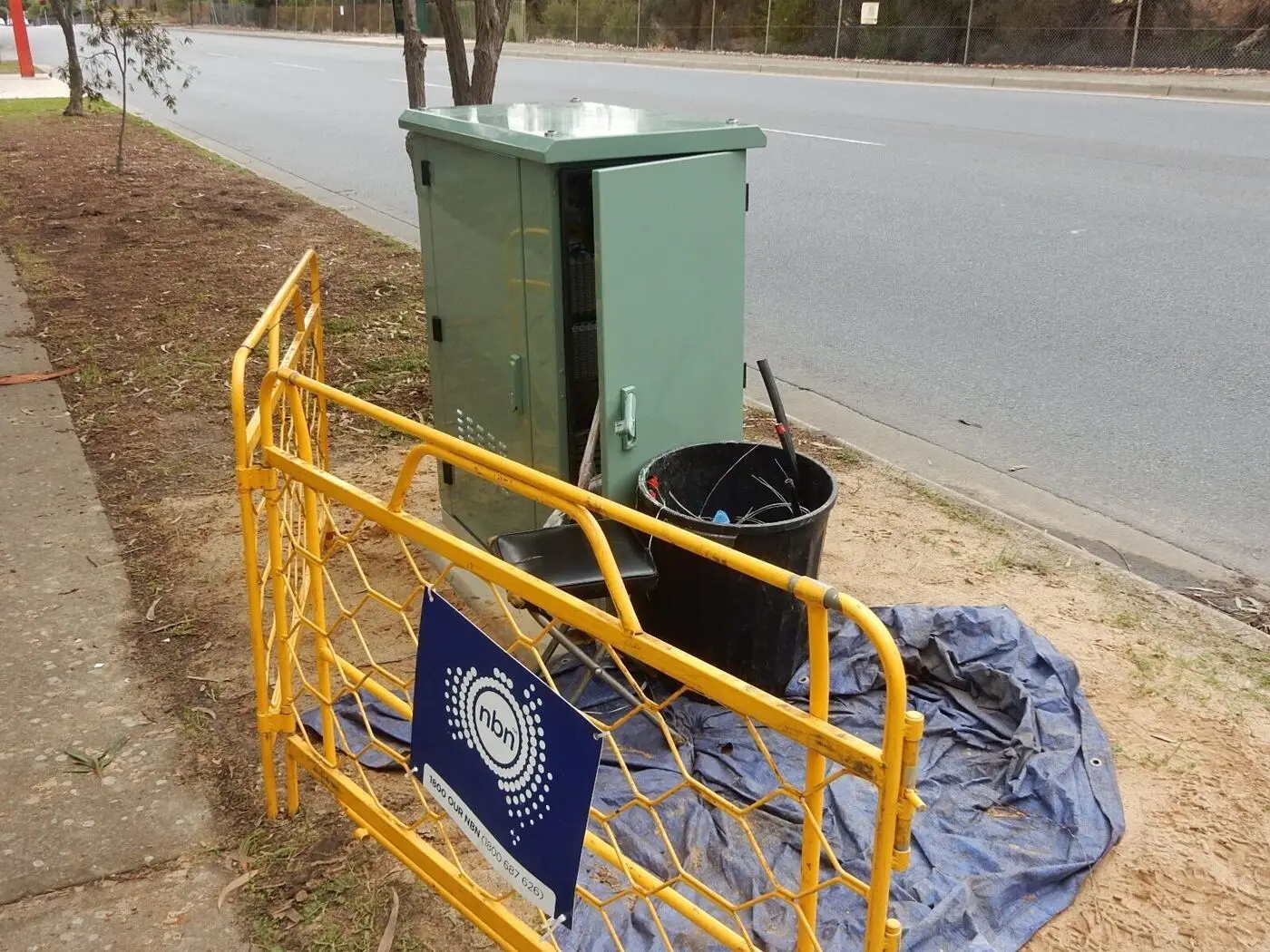
“What even is NBN?” sounds like a basic question, but I get it from customers more often than you’d think. Here’s the plain-English version, including what changed when NBN Co bumped its speed tiers in September 2025.
The quick version
NBN is Australia’s government-built internet infrastructure. It replaced the old copper phone network with a mix of newer technologies. Almost every Australian home now connects to the internet via NBN (unless you’re in an area with alternative providers like iiNet Cable in Geelong).
A brief history
From announcement to today
NBN Co established to build a national broadband network.
Original plan: fibre to every home (FTTP).
Policy changes to 'multi-technology mix' — fibre to nodes, copper for the last stretch — to reduce cost.
Initial rollout declared complete.
Ongoing upgrades — Fibre Connect lets many FTTN/FTTC homes upgrade to FTTP for free if they pick a higher-tier plan.
The six different NBN technologies
You don’t get to choose your NBN technology — your address chooses for you. That’s why two streets apart can have wildly different internet experiences.
NBN isn’t one technology — it’s six. What you get depends on your address:
| Technology | What it means | Typical speed |
|---|---|---|
| FTTP | Fibre to the Premises | Up to 2000 Mbps |
| HFC | Hybrid Fibre Coaxial (the old Foxtel cable network) | Up to 1000 Mbps |
| FTTC | Fibre to the Curb | Up to 100 Mbps |
| FTTN | Fibre to the Node | 25–100 Mbps (varies wildly with copper distance) |
| Fixed Wireless | Radio signal to a roof antenna | 50–400 Mbps depending on tower |
| Sky Muster | NBN’s two satellites | Up to 25 Mbps |
The address is destiny here. Check yours at the NBN address checker before signing up to any plan tier.
If your address comes back as Sky Muster, or as Fixed Wireless that struggles, it is worth comparing Starlink for rural properties around Geelong before you sign up to anything.
How NBN actually works
Why you don't pay NBN Co directly
NBN Co owns and runs the physical infrastructure — cables, nodes, towers, equipment.
You buy service from a retailer (Telstra, Aussie Broadband, TPG, Launtel, etc). The retailer is the one you pay each month.
Retailers pay NBN Co for wholesale access, then resell with their own margin. That margin pays for support, billing, and the retailer's own backbone.
Your real-world speed is capped by both your plan AND your address's NBN technology — whichever is the lower number.
NBN Speed Tiers (Updated September 2025)
NBN plans come in speed tiers. Major upgrades took effect on 14 September 2025 for FTTP and HFC customers:
| Plan | Previous Download | Current Download | Availability |
|---|---|---|---|
| NBN 25 | 25 Mbps | 25 Mbps | All technologies |
| NBN 50 | 50 Mbps | 50 Mbps | All technologies |
| NBN 100 | 100 Mbps | 500 Mbps | FTTP, HFC only |
| NBN 250 | 250 Mbps | 750 Mbps | FTTP, HFC only |
| NBN 1000 | 1000 Mbps | 1000 Mbps (min 750) | FTTP, HFC only |
| NBN 2000 | N/A | 2000 Mbps | FTTP, HFC only |
Key change: If you have FTTP or HFC and an NBN 100 plan, you now get 500 Mbps for the same price! FTTN and FTTC customers don’t get these upgrades (unless upgraded to FTTP).
The first number is download speed, the second is upload. “Mbps” means megabits per second.
Why your real-world speed is often lower
Your real download speed is capped by whichever of these five things is slowest on the day.
Why advertised speed and real speed are usually different
FTTN drops with copper distance; Sky Muster is hard-capped at 25 Mbps; everything else has its own ceiling.
If you're on NBN 50, you can't go faster than 50 even if your line could do 1000.
7–11 pm is the busiest stretch — providers who under-buy capacity slow down here. The good ones don't.
An old VDSL modem or an underpowered HFC unit will quietly cap you below the line's actual ceiling.
Even a perfect 1 Gbps connection is meaningless if your router is dropping you to 80 Mbps in the back bedroom.
NBN vs WiFi — different things
NBN gets the internet to your house. WiFi distributes it inside the house. They’re two completely different problems and the fixes don’t overlap.
You can have great NBN and bad WiFi. You can have bad NBN and great WiFi. Most “slow internet” complaints I hear in Geelong turn out to be the WiFi side.
This distinction is the reason most “slow internet” calls turn out to be WiFi calls. Our assessment measures both, separately, so nobody blames the wrong one.
Plug a laptop directly into your modem with an ethernet cable. Run a speed test. If the wired test matches your plan tier, your NBN is fine — the slowness is in your WiFi (and that’s fixable). If the wired test is also slow, you’ve got an NBN-side problem and it’s worth looking at provider, plan tier, or a Fibre Connect upgrade.
Checking Your NBN
To find out what NBN technology you have:
- Visit nbnco.com.au/check-your-address
- Enter your address
- It shows your technology type and available speeds
You can also check the NBN connection box in your home - it usually has a label identifying the technology.
Related reading
- FTTP explained
- FTTN explained
- Does your NBN provider actually matter?
- The best NBN providers in Australia (no ads, no sponsorship)
Official resources
- NBN Address Checker — Check what NBN technology is available at your address
- NBN Speed Guide — Understand NBN speed tiers
- NBN Upgrade Information — Check if free fibre upgrades are available
Common questions
Who actually owns NBN?+
NBN Co — a government-owned wholesale company. They build and maintain the network, but they don't sell to households directly. You buy a plan from a retail ISP (Telstra, Aussie Broadband, Superloop, etc.) who pays NBN Co to use the infrastructure.
What changed in the September 2025 NBN speed boost?+
On 14 September 2025, NBN Co bumped most retail speed tiers without a price rise. NBN 100 typically now delivers up to 500 Mbps and NBN 250 up to 750 Mbps on FTTP and HFC. A new NBN 2000 tier was added at the top. FTTN and FTTC didn't get the boost because the underlying lines can't physically support higher speeds.
How do I know if I have FTTP or FTTN?+
Check your address at nbnco.com.au/check-your-address. Or look for clues at home: a small VDSL modem plugged into a phone socket usually means FTTN/FTTC. A wall-mounted NBN box (NTD) with a fibre lead usually means FTTP. An NTD fed from coaxial cable means HFC.
Can I switch NBN technology — e.g. FTTN to FTTP?+
Sometimes yes, via the Fibre Connect program. Many addresses are now eligible for a free FTTP upgrade if you commit to a higher-tier plan with a participating ISP for a minimum period. Geelong's Fibre Connect coverage has expanded a lot in the past 18 months.
Why is my NBN slow even though I'm paying for NBN 100?+
Three usual suspects. First — your underlying technology might cap below your plan (very common on FTTN). Second — your ISP might be congested at the local POI during peak hours. Third — your home WiFi might be the bottleneck, and the NBN side is fine. The diagnose-your-internet guide walks through how to tell which it is.